Internationally at least the haka is most associated with Aotearoa New Zealand’s national men’s rugby team, the All Blacks. It immediately preceded the start of test matches. The haka is a customary Māori way of welcoming visitors but traditionally also served to invigorate warriors as they headed into battle. It is both a show ofContinue reading “Haka, Hikoi and the Empowerment of the Kohanga Generation”
Tag Archives: politics
Fast-tracking wealth accumulation and the ‘war on nature’
The Fast-Track Approvals Bill currently before Parliament is up there with the most controversial decisions of the National-ACT-New Zealand First coalition government. This coalition, elected a year ago, is one of the most right-wing governments Aotearoa New Zealand has ever had. One has to go back to the National government elected in 1990 to findContinue reading “Fast-tracking wealth accumulation and the ‘war on nature’”
Why Socialism (why not New Zealand)
When people think of the German born Albert Einstein (1879–1955) usually this would be as the theoretical physicist who is widely held as one of the most influential scientists in the world. They would think of him being best known for developing the theory of relativity. Some would also be aware of his important contributions toContinue reading “Why Socialism (why not New Zealand)”
Careful what you ask for Labour Party: following UK Labour not smart politics
Labour leader Chris Hipkins is presently in the United Kingdom to learn from the British Labour Party led by new Prime Minister Keir Starmer. Although Leaders of the Opposition are entitled to an annual overseas study trip (Chris Hipkins also went to the UK last year), this one has attracted more than usual media interest,Continue reading “Careful what you ask for Labour Party: following UK Labour not smart politics”
Towards an economy based on provision of human needs
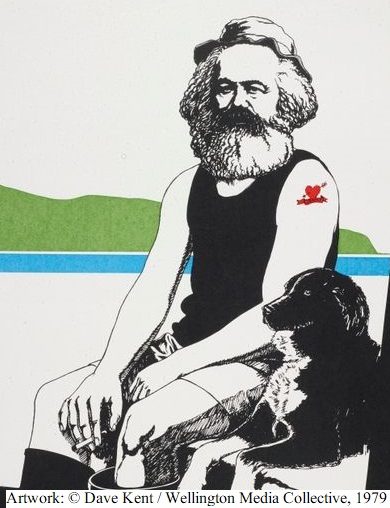
A critical feature in Karl Marx’s theoretical construct of political economy provides a valuable insight on how economies in countries such as Aotearoa New Zealand, function and how they might function better in order to achieve the well-being of their peoples. This construct begins with the statement that any product begins first with both aContinue reading “Towards an economy based on provision of human needs”
Keith Locke: Hard on issues; soft on people
One of the outstanding union leaders of the late 20th and early 21st centuries made many wise observations. The one that registered with me the most was the importance of being ‘hard on the issues but soft on the people’. That person was Peter Conway. He was active in private sector unionism for many yearsContinue reading “Keith Locke: Hard on issues; soft on people”
Function versus form: public service cuts
The National-led coalition government is undertaking a brutal assault on the public service by implementing blunt arbitrary cuts on public service staffing. The cuts are intended to be up to 7.5% but in some ministries and departments it could be higher. Its official justification is that there is too much ‘fat’ in the public service.Continue reading “Function versus form: public service cuts”
From overcoming ‘bonkers’ to a political pickle
Labour’s landslide victory in the 2020 general election meant that it became the first majority government in Aotearoa New Zealand since the introduction of proportional representation in 1996. If someone had said then it would not only be voted out but also thrashed in the next election, the response would have overwhelmingly been ‘bonkers’, orContinue reading “From overcoming ‘bonkers’ to a political pickle”
 Political Bytes