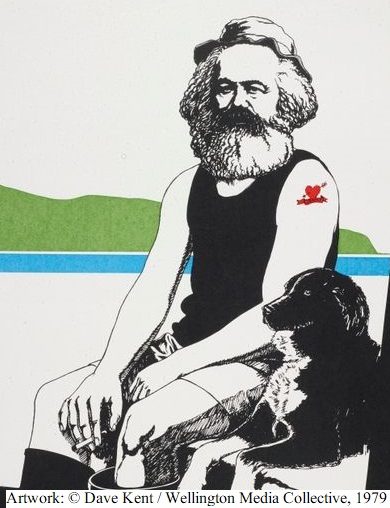
On 27 October there will be the annual consideration of the United States’ blockade (economic warfare is a better description) at the United Nations General Assembly in New York.
The next day the Assembly will consider a resolution under the following official title:
Necessity of ending the economic, commercial and financial embargo imposed by the United States of America against Cuba.
In the past Aotearoa New Zealand has voted for ending this embargo. In October 2025, the 33rd consecutive year in which the resolution was adopted, New Zealand was one of 165 countries voting in favour of the resolution.
Seven countries voted against it (United States, Israel, Argentina, Hungary, Paraguay, North Macedonia and Ukraine) with a further twelve abstentions.
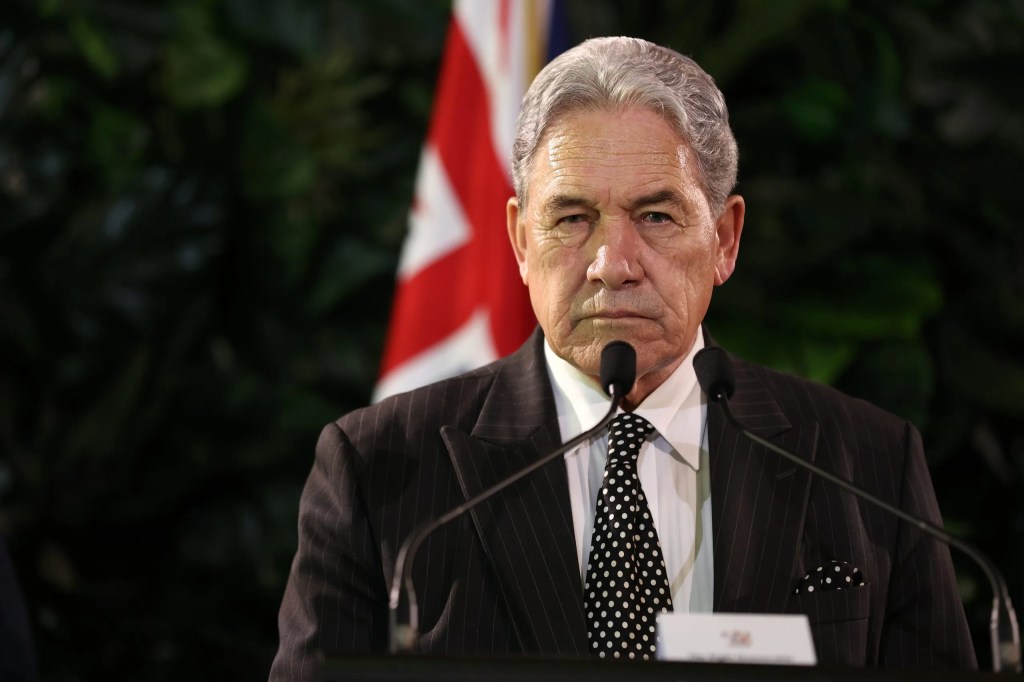
While Foreign Minister Winston Peters authorised support for anti-blockade resolution, this also included additional sanctimonious pro-US comments
A joint explanatory statement on the vote with Australia said that both countries had supported the resolution because the blockade was “contrary to open trade and investment.
Unfortunately the rest of the statement was essentially US anti-Cuba unsubstantiated and hypocritical soundbites (given the US’s disgraceful approach to human rights and the use of starvation to achieve goals) instead of elaborating on the humanitarian harm of the blockade.
Your generosity has the power to change lives. Every contribution—big or small—helps me continue our mission to help make Aotearoa New Zealand a better place for its people. Donate
Devastating effect on entire Cuban population
UN Special Rapporteur Professor Alena Douhan reported in July on the impact of the blockade on Cuba, including her visit to Cuba last November, to the United Nations Human Rights Council which is presently in session in Geneva: UN Rapporteur report.
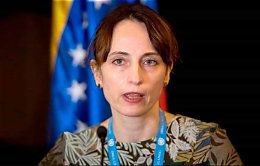
UN Special Rapporteur and law professor Alena Douhan
She concluded that the blockade has had:
…devastating effect on the entire population, especially persons living poverty, women, children, older persons, persons with disabilities and persons with chronic illnesses.
Further:
…in Cuba, the Government and individual citizens are hampered from engaging in long-term planning; social and political initiatives are forced to remain short-term due to the precarious situation…
Flagrant, massive and systematic violation of Cubans human rights
Ambassador Rodolfo Benítez Verson is Cuba’s ambassador to the United Nations. On 9 September he responded to the Special Rapporteur’s findings: Cuba’s response to Special Rapporteur’s report.
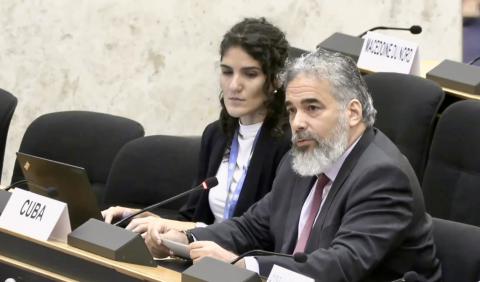
Ambassador Rodolfo Benítez Verson, Permanent Representative of Cuba to UN
The Ambassador’s response is hard-hitting; calling a spade a spade, including the following observation on the inhumanity of the blockade:
…flagrantly, massively, and systematically violates the human rights of Cubans, including the rights to food, health, education, development, and life.
Further:
The deliberate and malevolent aim of the United States is to inflict extreme hardship and completely suffocate Cuban families. They seek to bring about a humanitarian tragedy in order to destabilize the country and achieve their political objectives.
Since last January, the United States has imposed a brutal energy siege on Cuba, constituting an unprecedented tightening of the blockade. It threatens reprisals against any country that supplies oil to the Island. Fuel shortages have had a devastating impact on almost every area of society.
Due to the lack of electricity and supplies, the national health system is forced to postpone non-urgent surgeries in order to prioritize life-saving ones. More than 100,000 patients are waiting for surgery, including 12,000 children. The survival rate of children with cancer has fallen from 85 percent to 65 percent. The infant mortality rate has risen from 4.4 per thousand live births in 2018 to 9.9 in 2025. Of the 395 medicines Cuba produces as part of its basic health system formulary, 300 are unavailable due to difficulties in accessing raw materials.
Behind these figures are human beings and the immense pain and anguish of Cuban families.
The architects of this policy of genocide and collective punishment celebrate as successes the agony of a Cuban mother who loses a child for lack of medicines. They rejoice when our elderly people have no ambulance available in an emergency. They take pleasure in prolonged power outages, high food prices, and difficulties with water supplies and other basic services.
And:
The effects are severe. Suffice it to mention that more than 7,000 containers, most of them carrying food, medicines, and medical devices, remain stranded in different countries and cannot be transported to Cuba because of intimidation against shipping companies.
The sophisticated methods of suffocation against the Cuban population that the United States has developed in recent months far exceed the pressure exerted against the country for decades. Its cruelty knows no bounds.
As a result, the Cuban people have suffered a deterioration in their quality of life and incalculable humanitarian harm.
No people deserve, nor should ever be subjected to, such punishment simply for upholding their right to self‑determination. But they will not break us. They will have to answer to history, and the Cuban people will never forgive them.
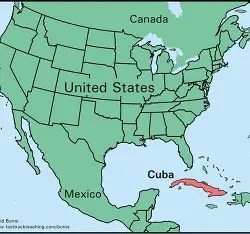
United States claims that Cuba represents an imminent and severe threat it; really!
He also addressed the claim that Cuba represents an imminent and severe threat to the United States:
The notion that Cuba could pose a danger defies common sense in light of the disproportionate military might of the country that spends more than any other on war, possesses more than 5,200 nuclear weapons, 13,000 military aircraft, and 1,200 military bases in 80 countries, including the Guantánamo Naval Base, on illegally occupied Cuban territory.
There can be no justification whatsoever for attacking Cuba, nor for imposing inhumane coercive measures whose humanitarian impact is comparable to that of war. Cuba is not a threat; the blockade is!
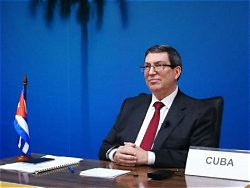
Bruno Rodríguez Parrilla, Cuban Foreign Minister: “a silent genocide that claims lives”
Cuba’s foreign minister is Bruno Rodríguez Parrilla. He has also spoken out on the effects of the blockade.
At the recent 18th BRICS Summit, held in New Delhi, he made the following penetrating observation:
It is a silent genocide that claims lives. The nation’s infant mortality rate has doubled from 4 per thousand live births to 9.9 and the life expectancy of children with cancer has fallen from 85% to 65%. Causing human damage, suffering and anguish is the goal of this cruel policy, deliberately designed with that purpose.
BRICS adopted a resolution strongly criticising the blockade which included serious concerns over its humanitarian effects. This is something the New Zealand government should learn from.
Your generosity has the power to change lives. Every contribution—big or small—helps me continue our mission to help make Aotearoa New Zealand a better place for its people. Donate
What sits behind over 60 years of US economic warfare
However, all this begs the question; why this brutal and cruel inhumane over 60-years economic warfare by the world’s largest economy against one of the smallest. I discussed this in an earlier blog post (25 April): Behind US lengthy hostility to Cuba.

Wealth accumulation drives capitalism, especially imperialism
I linked it to the difference between an economy driven by wealth accumulation (US) and an economy that isn’t (Cuba) concluding with:
What defines capitalism is that its prime driver is the maximisation of wealth accumulation from both the appropriation of surplus value from workers and degradation of the environment.
It is when the role of the many is to serve the economy so that the few can consequentially materially and otherwise benefit.
The more a country, no matter how small, migrates towards an economy that serves the people, the more it is a threat to capitalism.
When the economy serving the people is enshrined in a country’s constitution then imperialism is also threatened.
This goes to the core of why the United States is so determined to defeat the Cuban Revolution. It also goes to the core of why we all should oppose this evil determination.
‘Ripe fruit theory’
While this explains why the United States, as the most powerful imperialist nation, is so hostile to the resilient Cuba since the 1959 Cuban revolution, it is important to also understand its relationship with Cuba in the preceding decades.
Professor Ernesto Dominguez Lopez provides historical context for US attitude towards Cuba
Dr Ernesto Dominguez Lopez is Professor of History at the University of Havana. He is also a visiting history professor at Stanford University in the United States.
On 12 September 2025 he posted an insightful informal post on You Tube discussing ‘US-Cuba Relations’: History of US hostility towards Cuba.
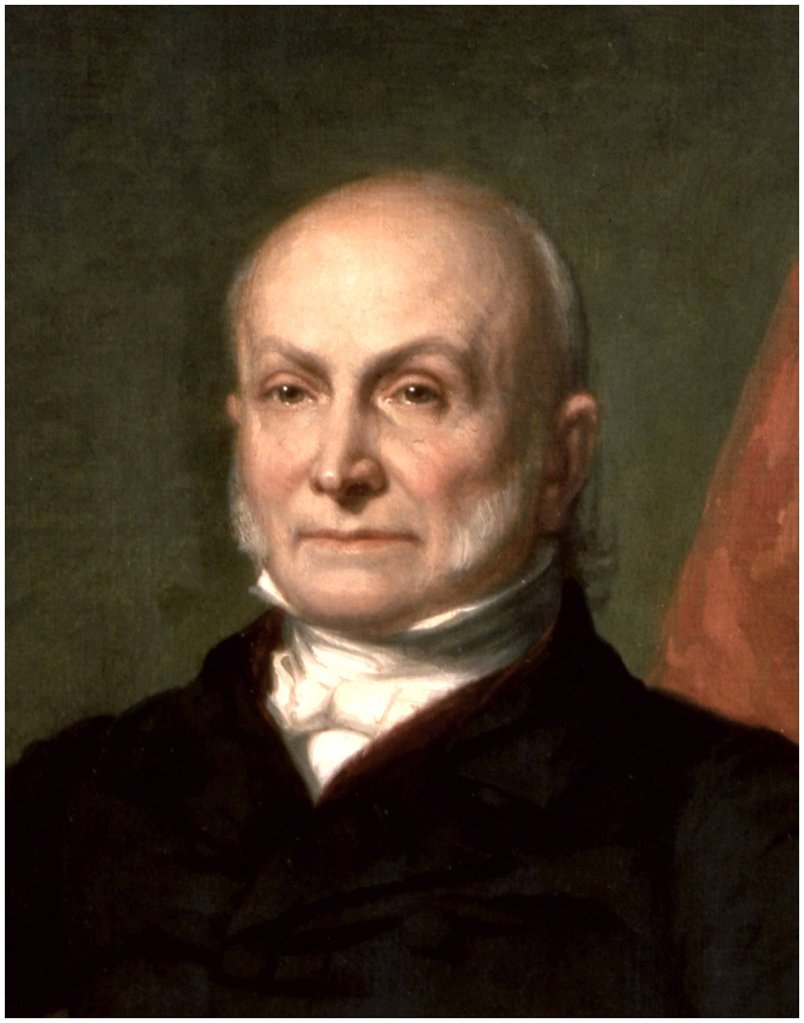
John Quincy Adams, 6th President of the United States, 1825-29, espoused his ‘ripe fruit theory’ in 1823
Professor Lopez gives John Quincy Adams prominence in understanding this hostility. Adams (his father was the second US president) was an advocate for strong central government, ‘moral governance’, diplomacy, and anti-slavery policies.

Cuba an apple severed from its Spanish colonial tree gravitating to a US colonial tree
But despite this and a reputation for often prioritising justice over political expediency, in reference to Cuba he expressed his paternalist ‘ripe fruit theory’, two years before become president, which he described this way:
…if an apple severed by its native tree cannot choose to fall to the ground, disjoined from its own unnatural connection with Spain, and inescapable of self-support can gravitate only towards the North American Union.
In this context Professor Lopez emphasised the criticality of Cuba’s geographic location in the Caribbean under Spanish, briefly British and subsequently American colonialism. In this environment Cuba was the centre of a dense network of trade.
The turning point was the Independence Wars in Cuba against Spain from 1868 to 1898. While the United States began by supporting Cuban independence, eventually it shifted to imperial control of the island.
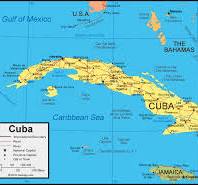
Cuba became a US protectorate in 1899 and did not achieve full independence from its controlling power until 1959 (leading to expanding US embargo since 1962)
From 1899 Cuba effectively became a US protectorate with all the control that went with this status. This control included a series of military interventions.
There was a change in the 1930s from protectorate to ‘neo-colony’ based on a new legal framework, including electoral. From 1952 to 1959 Cuba had a US-supported military dictatorship.
The 1959 revolution was against the lack of sovereignty that was consequential to the ‘ripe fruit theory. Its success raised serious geopolitical issues by opening up a large hole in US control.
New Zealand and the UN vote
As discussed above, the United Nations General Assembly will be holding its annual vote criticising the United States’ blockade of Cuba. This will be the 34th vote since the first was held in 1992.
New Zealand has consistently supported this critical resolution; it appears to have voted in opposition to the blockade in all of the preceding 33 votes.
There is no reason to believe that the 34th vote will be any different, even given the current government’s gradual pivot away from Aotearoa’s longstanding independent foreign policy and towards a closer United States relationship.
But there is every reason to question whether it will continue to include last year’s weasel words based on US ‘talking points’ in its explanatory statement.
However, the Government should consider this. A key barometer of a country’s population’s overall health is its infant mortality rate. In 2025 the total world rate was 25 deaths per 1,000 live births. For Latin America and the Caribbean it was 12.6.
In the European Union (1924) the infant mortality rate was 3.4; in the United States it was 5.1; in Canada it was 3.9; in Australia it was 2.6; and in New Zealand it was 4.8 (up from 3.5 in 2023).
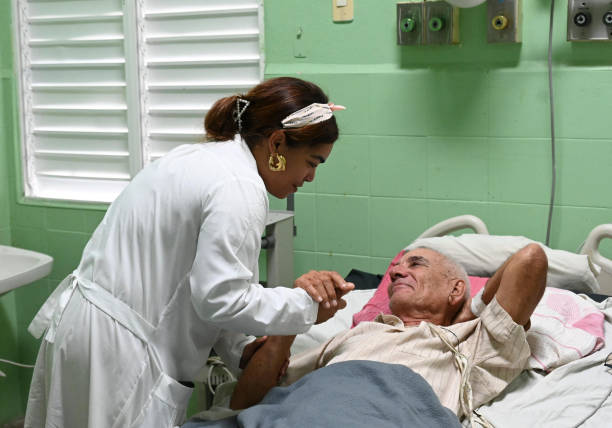
Cuban health system helped ensure low infant mortality rate until severely increased sanctions caused massive deterioration
Cuba may not be an economically developed country but it is an economically and politically resilient one. In 2018 its infant mortality rate was a competitively impressive 4.0.
If had not been because of this, including its strong focus on healthcare, Cuba’s likely infant mortality rate would have been somewhere 12 and 25 deaths per 1,000 live births.
Donald Trump has the blood of Cuban babies on his hands (New Zealand government should factor this in its UN vote)
However, due to the significantly increased sanctions initiated by President Trump, which includes using starvation as a tactic, its infant mortality rate has increased by a massive 148% to a rate of 9.9 deaths per 1,000 live births in 2025.
Let’s put it another way; if the rate of infant mortality had remained unchanged, then approximately 1,800 fewer babies would have died since 2018.
This genocidal reality should form part of New Zealand’s explanatory statement when it casts its expected vote in late October.
The BRICS summit recognised these precarious humanitarian issues in its resolution opposing the US economic warfare; so should Aotearoa New Zealand.
Your generosity has the power to change lives. Every contribution—big or small—helps me continue our mission to help make Aotearoa New Zealand a better place for its people. Donate
Recent Political Bytes posts
- Removing the ‘veil of good intentions in US foreign policy (6 September).
- Don’t blame Jews for Israel’s genocidal ethnic cleansing (or for Zionism) (29 August).
- Sinister attack on investigative journalist for being investigative (3 August).
- Destroying Palestinian childhood (8 July).
- Does opportunity knock for Opportunity Party (20 June).


3 thoughts on “‘Ripe Fruit Theory’ and New Zealand’s vote in the UN General Assembly on US economic warfare against Cuba”