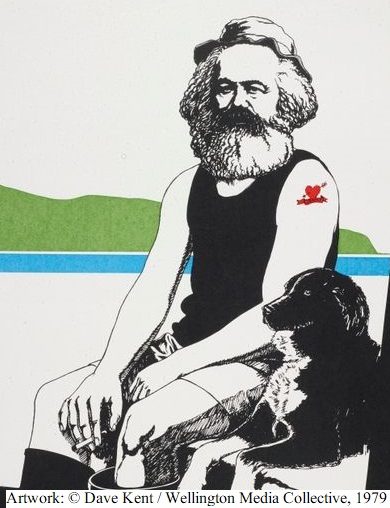
The ‘veil of good intentions’ is an interesting phrase that does not have a specific meaning. Rather it is more metaphorical or symbolic associated with modesty, purity and mystery.
Ben Rhodes is a former Deputy National Security Adviser in the White House, 2009-17
It is a phrase that particularly struck me when reading an absorbing paywalled article by Ben Rhodes and published in the New York Review of Books (26 February): Removing the veil of good intentions.
As the New Zealand government pivots more and more away from a bipartisan independent foreign policy and towards a closer alignment with that of the United States, it would do well to consider the analytical insights of Rhodes.
Your generosity has the power to change lives. Every contribution—big or small—helps me continue our mission to help make Aotearoa New Zealand a better place for its people. Donate
Understanding pre-Trump US imperialism through McNamara
Ben Rhodes is reviewing a timely new biography on United States Secretary of Defence for much of the 1960s and chief political proponent of the deadly American war in Vietnam, Robert McNamara.
It took McNamara until 1995 before he published that what he did was “wrong, terribly wrong”.
The biography is McNamara at War by brothers Philip and William Taubman; one a veteran New York Times reporter and the other a Pulitzer Prize–winning biographer.
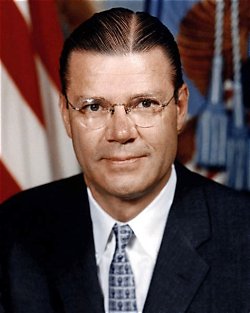
Robert McNamara the most influential proponent of US imperialism in Vietnam in the 1960s; later he led the World Bank
Drawing on unprecedented access to McNamara’s papers enabled the brothers to revisit familiar questions:
Why did he fight so hard to escalate a war that he soon realized was beyond winning? Why did he decide the war was unwinnable? Why didn’t he fight to end it? Why did he refuse for so long to criticize it?
Much of the review is on McNamara and these questions. But of particular interest to me was the ability of Rhodes, as a former insider into the federal security intelligence system. to draw upon this experience and make several pertinent and insightful observations.
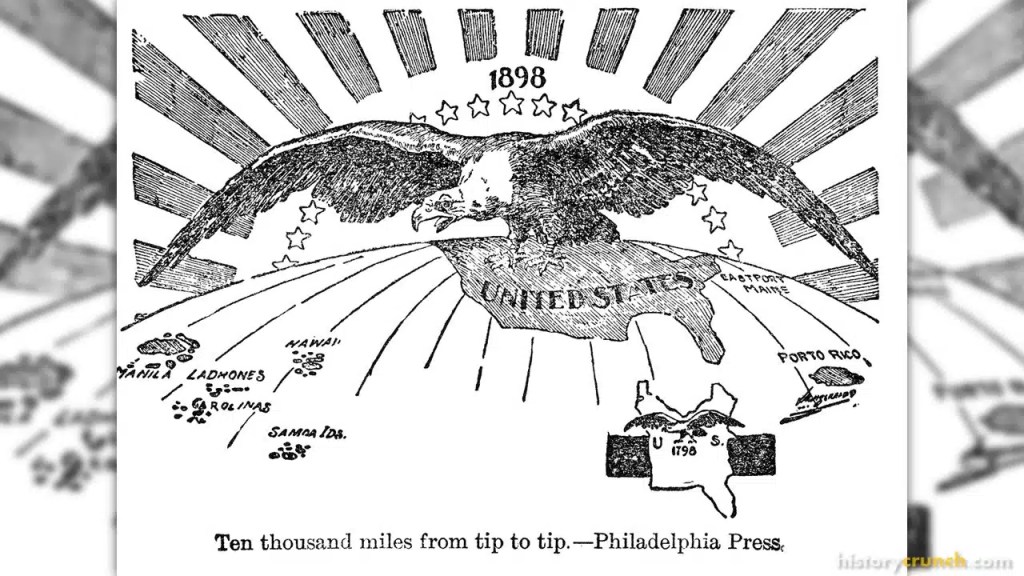
American imperialism began in 1898; not under the 1823 Munroe Doctrine as often assumed
What Rhodes describes as US foreign policy, I call US imperialism. Imperialism is when a powerful country practices or advocates extending power over other countries and peoples.
Usually this is by either direct territorial acquisition or by gaining political and economic control. The United States is largely the latter than the former in contrast to the earlier Spanish, British, French, Dutch and Portuguese imperialisms.
This is not Rhodes’ argument. But what he analyses is consistent with my view that the United States is not only imperialist; it is the most powerful imperialist power in the world.
Unintentionally or not, he adds to the understanding the evolving rationalisation of American imperialism.
The puzzle Rhodes seeks to explain is the prolonged failure to challenge why the United States was involved in Vietnam in the first place.
And then he discusses what led McNamara and others to make decisions about a country they knew nothing about leading to the devaluing of Vietnamese lives relative to Americans and the killing of more than three million Vietnamese before its chaotic exit.
Rhodes asks the question:
What innate confidence in our own special character leads the US government to try to control a world that does not want to submit to our will and does not believe in our supremacy?
Your generosity has the power to change lives. Every contribution—big or small—helps me continue our mission to help make Aotearoa New Zealand a better place for its people. Donate
Imperialism under Donald Trump
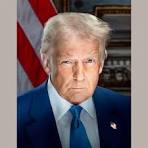
Under Donald Trump there is no pretence of good intentions for foreign policy (BBC)
Ben Rhodes then moves to the current situation under the United States’ governing authoritarian coalition of the hard and far political right (my descriptor, not his):
We are now entering another spasm of aggression cast as necessity, as an American president has illegally deposed Venezuela’s socialist leader, declared that he is running the country on behalf of oil companies, and threatened Greenland, Iran, Cuba, Mexico, Colombia, Panama, and Canada.
…To Donald Trump, the lessons of history are immaterial to his lust for personal aggrandizement and hemispheric domination. Unlike with Vietnam, there is no pretence that US actions are in the service of any values: we are now fully in a world based on the principle that might makes right.
Little, if anything was learnt, in the decades between McNamara and Trump. Rhodes gives two examples under the ‘veil’ of the ‘war against terror’:
- American military involvement in Afghanistan began with the arming of the Mujahideen—which later morphed into the Taliban and al-Qaeda—in the 1980s and ended nearly four decades later with the chaotic withdrawal from Kabul.
- The Iraq War which devolved into a series of insurgencies.
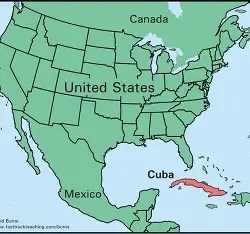
Cuba has challenged longstanding economic warfare from US imperialism
Had he been writing a longer review Rhodes might have added Iran (both in the early 1950s and now), Cuba, much of central America, and much of South America (with the Chile military coup and subsequent dictatorship in 1973 the most brutal).
An historically malign foreign policy masked by ‘good intentions’
The United States has historically had a malign foreign policy operating under the veil of claiming to be “…a virtuous superpower that spreads values around the globe…”
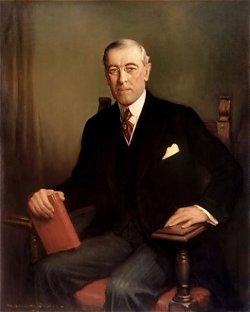
President Woodrow Wilson began the veil of making the world safe for democracy
This veil goes back to President Woodrow Wilson’s declaration that the United States was entering World War I because “the world must be made safe for democracy.”
In his eight years in the White House Ben Rhodes describes the problem with the war in Afghanistan not as a failure to formulate the right strategy or apply the right amount of resources.
Rather “… it was a mistaken belief in our capacity to control events inside other countries, and in the legitimacy of our attempts to do so.”
After Trump’s first election as president, and while attacked “as deep state saboteurs”, Rhodes and many of his national security practitioners continued to believe that:
…now we were fighting for the same thing at home that we said we stood for abroad. We were the good guys, on the side of democracy.
I suspect that this is an overgenerous character assessment although I have no doubt that is fair for some of these practitioners; it definitely is for Rhodes.
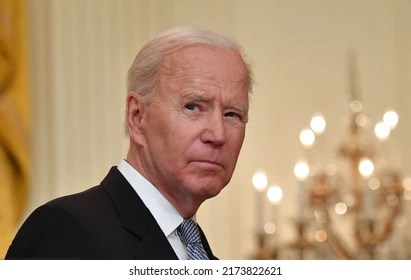
President Joe Biden shattered ‘good intentions’ veil
However, Joe Biden’s presidency shattered this illusion at least for Rhodes. The Biden administration’s foreign policy catchphrase was “America is back.” But now, for Rhodes:
This conveyed a willful [sic]blindness, because the US was seeking to restore a system of global hegemony that had lost legitimacy at home and abroad.
It was the US complicity with Israeli genocide in Gaza more than anything else that highlighted this disillusionment and new analysis. Rhodes words are as damming an indictment as can be:
History is unlikely to see it as a coincidence that the Biden administration ended with a period of unconditional support for Israel’s genocidal assault on Gaza. From Biden on down, members of the administration seemed to believe that it was coherent policy for them to provide a blank check of military aid while saying they were working on a cease-fire; to mouth words of discontent with the killing of Palestinian civilians while vetoing UN resolutions designed to stop that killing; to lament Vladimir Putin’s war crimes against Ukrainian children while lambasting the International Criminal Court for seeking the prosecution of Benjamin Netanyahu for war crimes against Palestinian children; to believe its intentions were good when its actions were not.
You cannot compartmentalize your values and stay true to them. You cannot pledge fealty to racial equality for Americans while supporting such inequality abroad. You cannot be that hypocritical without people around the world, including Americans, doubting your convictions.
Dangerous territory: analysing Donald Trump
This leads into Ben Rhodes’ insightful analysis of Donald Trump which is that:
Trump poses an exponentially greater danger to Americans and the world—not because he is a historical anomaly but rather because he reflects the worst impulses from the American past, now stripped of any investment in collective security, development, self-determination, or universal values.
Domestic and international law are being outright ignored rather than covering US imperialism by a veil of good intentions. But what Trump is so brazenly doing internationally is also what he is importing into the US.
Rhodes describes it this way:
…Americans [now] endure the military patrols, masked militiamen, weaponized system of justice, and wildly dishonest claims about fighting terrorism and extremism that the US government once reserved for other countries.
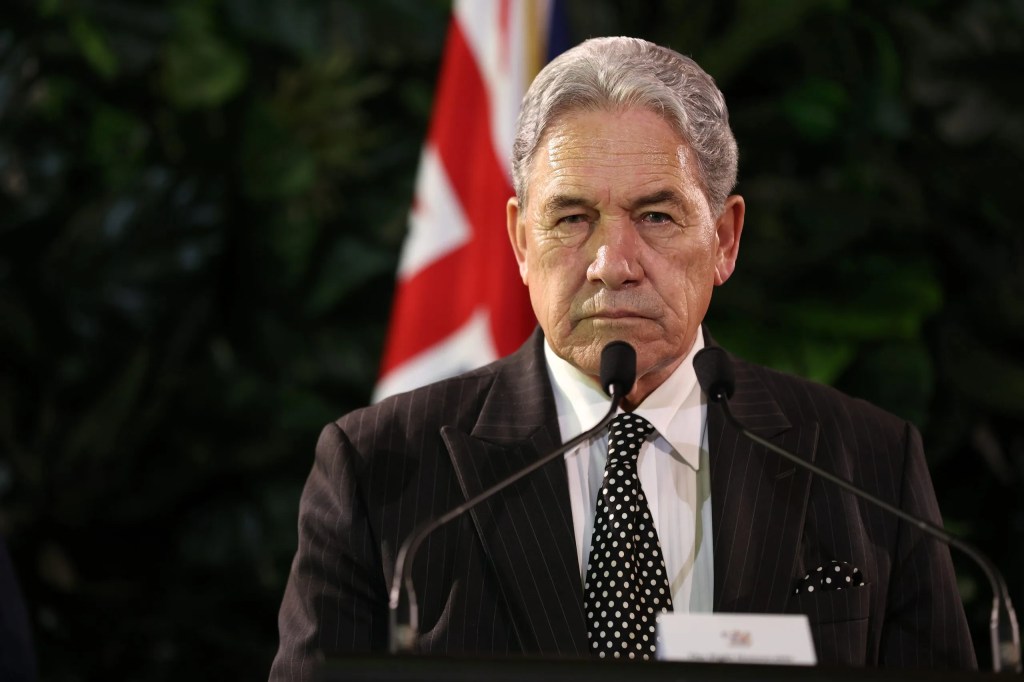
Is this what Foreign Minister Winston Peters wants to pivot towards?
Prior to Trump’s accession to power US imperialism was boundless power beyond its border but masked by asserted good intentions of supporting democracy and fighting terrorism.
Now, as Ben Rhodes describes so succinctly:
The veil of good intentions has been removed.
Your generosity has the power to change lives. Every contribution—big or small—helps me continue our mission to help make Aotearoa New Zealand a better place for its people. Donate
Recent Political Bytes posts
- Don’t blame Jews for Israel’s genocidal ethnic cleansing (or for Zionism) (29 August).
- Sinister attack on investigative journalist for being investigative (3 August).
- Destroying Palestinian childhood (8 July).
- Does opportunity knock for Opportunity Party (20 June).
- Hypocrisy of ‘Free Speech Union’ (6 June).


4 thoughts on “Removing the ‘veil of good intentions’: a lesson for New Zealand foreign policy”