On 20 April the Science Media Centre published expert responses to the overwhelming Wellington floods which hit the wider region with such unexpected suddenness, intensity and devastation: Expert reactions to Wellington floods.

Wellington Mayor Andrew Little: “a level of rainfall that is truly tropical and would be extreme even in the tropics”
Among the expert reactions I was particularly struck by the one from James Renwick, Professor of Physical Geography (climate science) at Victoria University:
The flooding in Wellington over the weekend is shocking in its intensity, so much damage and disruption happening so quickly, an absolute nightmare for those affected.
The Mayor [Andrew Little] reported that 77 mm of rain fell in one hour at one location, a level of rainfall that is truly tropical and would be extreme even in the tropics.
We are again seeing the effects of adding moisture to the air, which happens as that air warms. More moisture equals heavier rain, and can lead to more intense thunderstorms that draw in even more moisture to deliver the kind of deluges we saw this weekend.
The only way to stop such events becoming more extreme is to stop adding greenhouse gases to the air, especially carbon dioxide from fossil fuel burning. Anything our government, and all governments, can do to move away from fossil energy is something we would all be thankful for.
In the meantime, we must all adapt as best we can.
The Science Media Centre is an independent academic body committed to providing expert commentary for journalists
The devastation caused by the floods, including on infrastructure, has been well covered in the mainstream media.
Among the best has been by Newsroom managing editor Jonathan Milne (22 April): Infrastructure costs.
Behind the Wellington floods
But what sits behind the devastating and damaging floods is what causes most concern, more so because it is somewhere between being sidelined and ignored by the Government.

Professor James Renwick explains what was behind the Wellington floods
Professor Renwick explored this further the same day in an insightful longer piece in The Conversation: What made Wellington’s deluge so intense.
He described the deluge as:
…part of an increasingly familiar pattern reminding us that our communities and infrastructure aren’t yet prepared to cope with what a warmer, wilder future holds.
Over a 48-hour window, the capital saw rainfall totals that nearly tripled monthly averages…Bottom of Form
While noting the differences between these floods originating from the colder southern ocean with the devastating broader and warmer tropical slow moving Cyclone Vaianu the previous week, he emphasised that:
Once a system has access to enough moisture and instability, the end result can be much the same: intense rainfall falling over a short period. In this case, cold air moving over warm seas helped generate widespread convection: clusters of thunderstorms producing heavy, localised downpours.
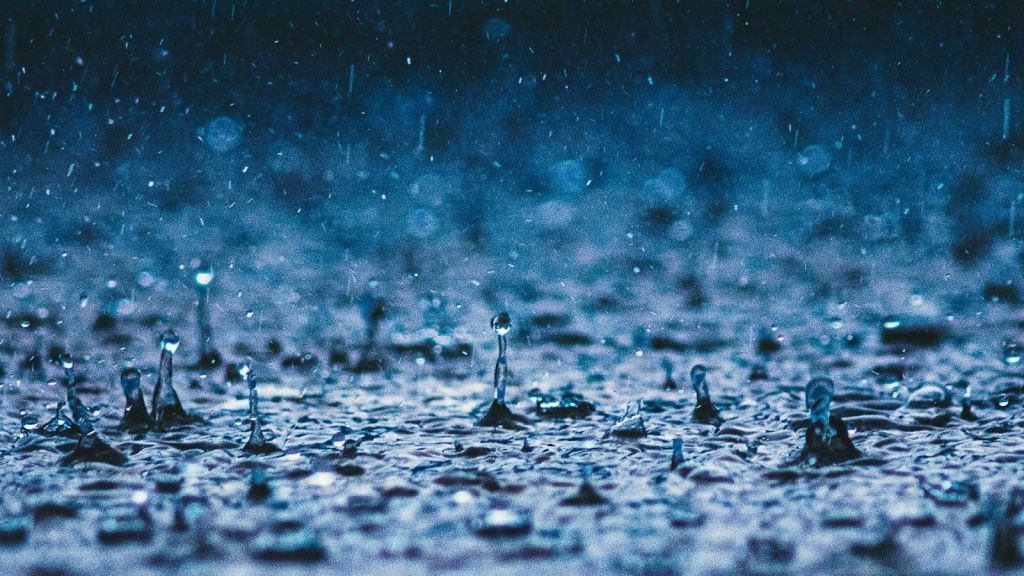
Wellington deluge difficult to both predict and provide advance advice because of smaller scale
Professor Renwick strongly makes the linkage between these flash floods and climate change, specifically “…the influence of a warming ocean and atmosphere.”
As sea and air temperatures rise, more moisture is held in the atmosphere. This provides additional fuel for storms, allowing them to produce heavier rainfall and more intense downpours over short periods.
While climate change does not mean every storm will be extreme, it does mean the chances of extreme rainfall are shifting over time.
He is unequivocal: Reducing that risk “ultimately depends on limiting further warming.” Further:
The only way to stop such events becoming more extreme is to stop adding greenhouse gasses to the air, especially carbon dioxide from fossil fuel burning. Anything our government, and all governments, can do to move away from fossil energy is something we would all be thankful for.
In the meantime, the focus must also be on adaptation, ensuring communities and infrastructure are better prepared for the intensity of rainfall events that are becoming more likely.
Suicidal capitalism
Professor Renwick is right to remind us that climate change sits behind the increasing number of adverse weather related events that Aotearoa New Zealand is now annually experiencing, including the massive landslide at Mount Maunganui earlier this year.
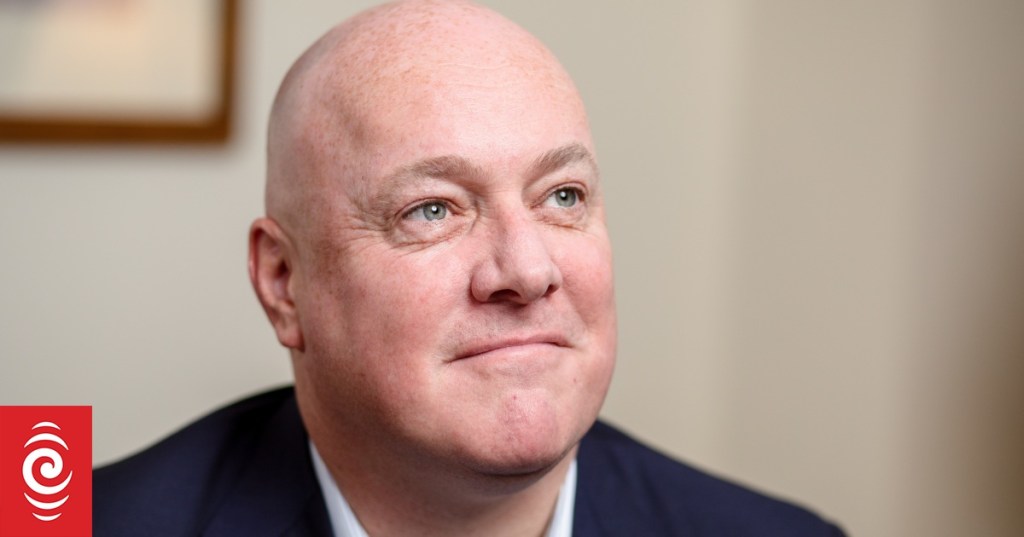
Christopher Luxon leads a government of climate change indifference and denial
What makes his message even more important is that unfortunately we have a government largely comprised of members who are either climate change indifferent or climate change deniers.
I discussed this political leadership trait in my 19 August post in the context of the introduction of road user charges for electric charged vehicles: Privatising rubber hits climate change denial roads.
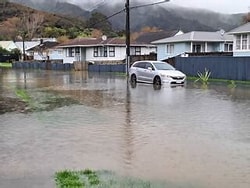
Wellington floods latest of increasing number of adverse weather events
However, we need to drill down further from what sits behind increasing adverse weather to what sits behind climate change itself.
In this context journalists Jonathan Watts and Fiona Harvey have recently published a timely article in The Guardian (29 April): Suicidal capitalism leading to war, fascism and potential extinction of humanity.
They report a climate summit attended by 57 governments last month in Columbia which was addressed by its President Gustavo Petro, an impressive leftwing political leader who is a former economist and guerrilla member.

President Gustavo Petro indicts suicidal drive of capitalism over fossil fuels and green energy
Blaming fossil fuel interests for taking increasingly desperate measures to prevent a transition to green energy, Petro warned that:
There is inertia in the power and the economy of this archaic form of energy – fossil fuels – that lead to death. Undoubtedly, that form of capital can commit suicide, taking with it humanity and [other] life. The question that needs to be asked is whether capitalism can truly adapt to a non-fossil energy model.
We are heading towards barbarism. And barbarism is the prelude to, or the very essence of, fascism.
What drives “suicidal capitalism”
But if “suicidal capitalism” is behind climate change, what drives capitalism? On 12 June 2023 I discussed this in another Political Bytes (post): Wealth accumulation, capitalism and climate change.
Wealth accumulation drives capitalism which drives climate change
In the post I concluded that:
There is one thing that capitalism and climate change share – more than anything else, at their core both are driven by the compulsion to accumulate wealth. Capitalism is defined by wealth accumulation in the context of class formations and commodity based economies.
Wealth accumulation also drives climate change. Extractive and allied industries are sufficiently powerful to neutralise the political influence of the overwhelming scientifically based evidence on what the human devastation unchecked climate change will lead to.
Further:
This does not mean that there aren’t forces within capitalism which see it differently and that there is not contestability, particularly within liberal democracies. But the decisive influence rests with the beneficiaries of extraction.
Wealth accumulation drives:
- capitalism which drives;
- fossil fuels extraction which drives;
- climate change which drives;
- increasingly dangerous adverse weather events which drives;
- an increasing risk of authoritarianism (and fascism) which drives;
- the increasing risk of the suicide of capitalism and even extinction of humanity.
If capitalism is not to commit suicide through its own contradictions, it is going to have to transform itself from a system in which “…the decisive influence rests with the beneficiaries of extraction” is replaced by this decisive influence resting instead with green energy.
While wealth accumulation remains the key driver of capitalism (as distinct from trade and commerce) this replacement will be very difficult.
But, if wealth accumulation was not the key driver of our economic and wider system, then it would not be capitalism. Just observing!
Recent Political Bytes Posts
- Making sense of Opportunities Party (14 April)
- US warfare against Cuba (25 March).
- Iran, US imperialism and New Zealand lapdog (19 March).
- Class warfare via employment law (3 March).
- Courageous words from unbreakable spirit (2 February).
 Political Bytes
7 thoughts on “Do Wellington floods, climate change and wealth accumulation equal “suicidal capitalism”?”