Cuba is facing a humanitarian crisis that has been caused by an unjustified escalation of an unjustified over 60-year old economic war by the most economically and militarily powerful country in the world, the United States.
Increasing infant mortality and the use of starvation are part of the escalation’s inevitable outcomes. But there is no evidence to even suggest that Cuba is a threat to Americans.
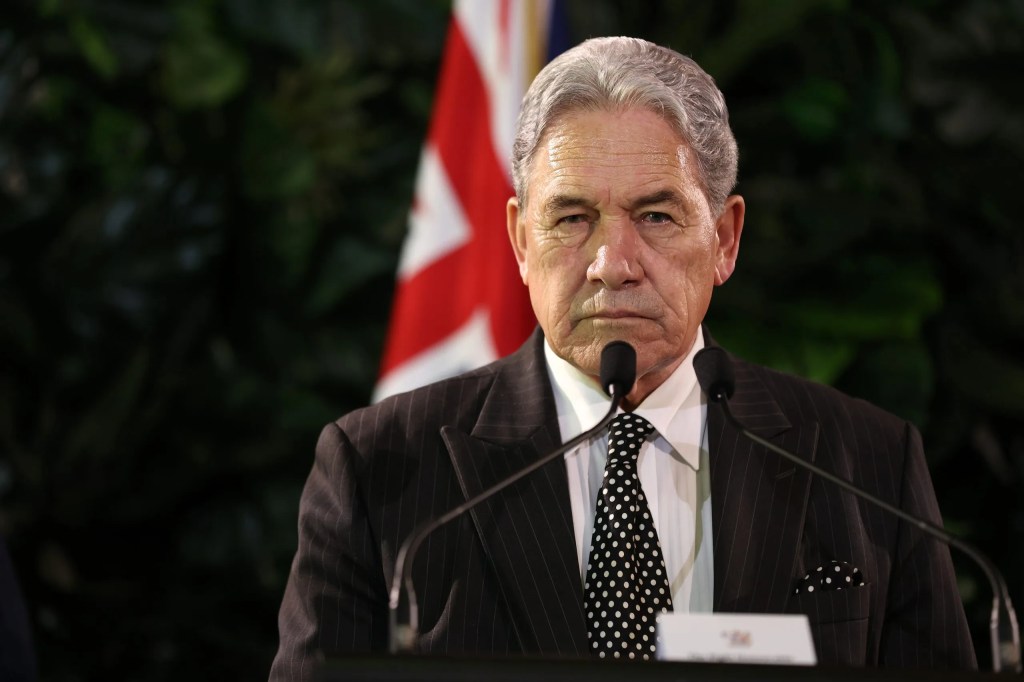
Foreign Minister Winston Peters’ apparent silence on economic warfare escalation lacks humanity
This raises the issue of the position of the New Zealand government towards this humanitarian crisis. To date its response seems to be a disappointing silence. Silence over inhumanity is inhuman.
‘Sanctions do kill’
An editorial The Lancet Global Health (August 2025) provides an alarming but timely revelation on the death toll impact of economic sanctions generally: Economic sanctions “do kill”.
The editorial primarily focussed on economic sanctions imposed by the United States and European Union. Reporting on an expert panel analysis at an international conference on financing for development in Seville, it concurred with its conclusion that “sanctions do kill”.
US (plus EU) economic sanctions kill many more that battle related conflicts
Economic sanctions imposed by the US or the EU were associated with 564,258 deaths annually from 1971 to 2021. This was over five times higher than the annual number of battle-related casualties (106,000 deaths).
The editorial also cited previous published research showing the lethal effects of economic sanctions specifically targeting development assistance in low-income or middle-income countries.
They resulted in a 3.1% increase in infant mortality and a 6.4% increase in maternal mortality annually between 1990 and 2019.
The editorial noted that:
All economic sanctions ultimately function as sanctions on health. Through their direct effects on access to medical products, provision of health-care services, and civilian mental health, as well as their indirect effects on determinants of health such as food security and socioeconomic development, sanctions inevitably or even intentionally undermine people’s right to health.
Moreover, the adverse effects of sanctions on health are most pronounced among children, women (versus men), and the most marginalised populations. With a low efficacy rate and a significant and uneven impact on health, it is questionable whether economic sanctions meaningfully reduce the number of deaths relative to military aggression.
Infant mortality barometer
A key barometer of a country’s population’s overall health, including access to healthcare, is its infant mortality rate. In 2025 the total world rate was 25 deaths per 1,000 live births. For Latin America and the Caribbean it was 12.6.
Contrast this with more economically developed countries. In the European Union (1924) the infant mortality rate was 3.4 deaths per live births; in the United States it was 5.1; in Canada it was 3.9; in Australia it was 2.6; and in New Zealand it was 4.8 (up from 3.5 in 2023).
Now consider the small Caribbean nation of Cuba. In 2018 the rate of infant deaths per live births was 4.0. This compared favourably with the European Union, Canada, Australia and New Zealand and was superior to the United States (the only one of these countries without a universal public health system).
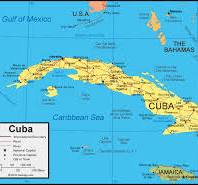
Cuba’s once remarkable infant mortality rate has significantly worsened since sanctions escalated from 2017
Cuba may not be an economically developed country but it is an economically and politically resilient one. If it were not for this Cuba’s likely infant mortality rate would have been somewhere 12 and 25 deaths per 1,000 live births.
The reason for this impressive performance is Cuba’s remarkable health system. I discussed this in my health systems blog Otaihanga Second Opinion (6 April): Understanding Cuba’s health system.
However, since 2018 its infant mortality rate has increased by a massive 148% to a rate of 9.9 deaths per 1,000 live births in 2025.
Let’s put it another way; if the rate of infant mortality had remained unchanged, then approximately 1,800 fewer babies would have died since 2018. This increase is at variance with the general pattern of improved rates in the Americas.
Brutal extension of US economic warfare
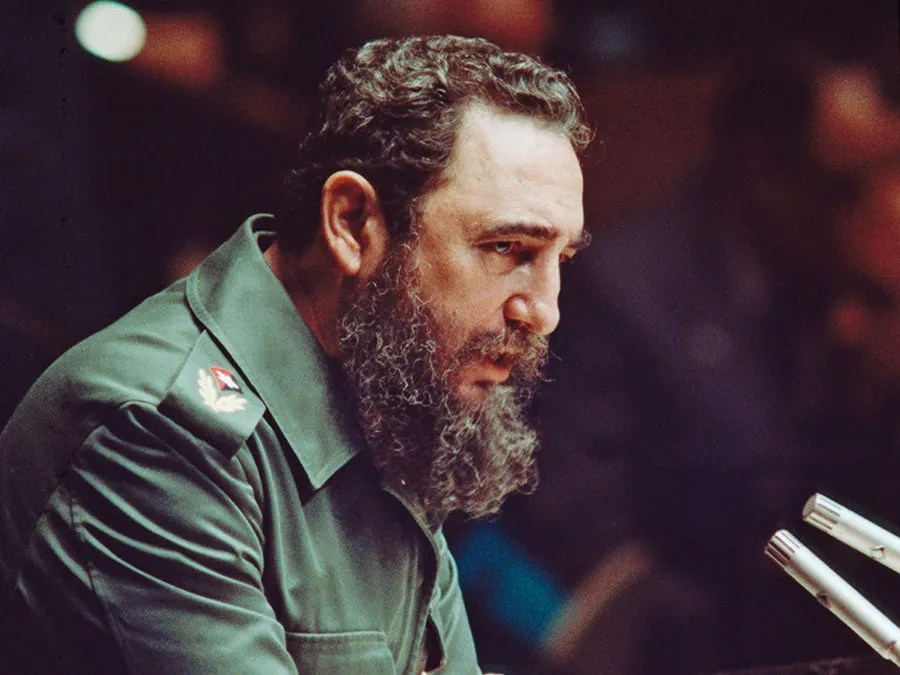
Fidel Castro led the 1959 Cuban Revolution that the US responded to with economic warfare
Why is this so? The answer is the brutal extension of the United States over 60 years old economic warfare in response to the Cuban Revolution led by Fidel Castro in 1959.
I discussed what was behind this warfare in a recent Political Bytes post (25 March): Behind US economic warfare against Cuba.
This warfare officially began with a trade embargo in October 1960 following the nationalisation of American-owned oil refineries in Cuba.
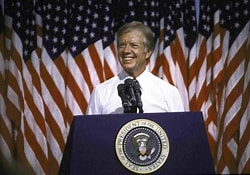
Embargo ended briefly under President Jimmy Carter
In 1977 it was ended by President Jimmy Carter but restored by his successor President Ronald Reagan. In December 2014 President Obama normalised diplomatic relations with Cuba although the embargo continued.
However, since 2017, beginning under President Trump and unconscionably continuing under President Biden, and now under Trump again, there an unprecedented expansion and tightening of the U.S. commercial and financial embargo.
President Donald Trump brutally escalated economic warfare against Cuba from 2017
One effect of this expansion and tightening was that unlike other Latin American and Caribbean countries who experienced a substantial economic rebound (3.2% annual per capita Gross Domestic Product growth up to 2024) following the Covid-19 pandemic beginning in early 2020, Cuba’s annual GDP was a mere 0.4%.
Over the past eight years the increased harmful economic measures have included:
- prohibiting transactions with most of Cuba’s major hotels and many other state-run businesses;
- blocking all exports of foreign-made products to Cuba that include more than 10% US-origin content;
- banning of cruise and most private vessels and aircraft from calling at Cuba; and
- restricting the flow of remittances from Cubans living overseas (mainly in the US).
The economic impact severely damaged Cuba’s largest industry – tourism. Tourist arrivals fell by 53% between 2018 and 2024 (I learned of the impact this decline as early as January 2020 when I visited Cuba) while income from tourism fell by 59%.
But, by far the most harmful action has been this year’s blockade of most oil supplies to Cuba, including from Venezuela and Iran.
Humanitarian crisis
An emotionally challenging article in The Guardian (30 April) by the United Nations resident coordinator in Cuba, Francisco Pichón, starkly outlines the humanitarian crisis this narcissistic escalated economic warfare has now created in Cuba: Fuel needed to save lives.
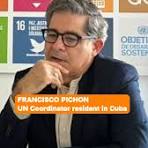
Francisco Pichón doesn’t pull his punches
In what he describes as an energy crisis, Pichón begins his article as follows:
With the US blockade cutting off oil, the island’s healthcare has been wrecked, access to clean water lost and babies put at risk.
Four months into Cuba’s deepening energy crisis, the consequences are no longer abstract: they are visible in the rhythm of daily life, Streets fall silent before night has fully set in. Hospitals scale back operations. Small businesses close due to a lack of supplies. At dawn, exhaustion shows on people’s faces after long nights without electricity.
But the most serious toll is measured not in inconvenience but in health.
Tens of thousands of surgeries have been postponed nationwide. Pregnant women face irregular access to prenatal care. Newborns dependent on incubators or ventilators are at risk when power fails. Patients undergoing dialysis, cancer treatment or managing chronic illnesses depend on electricity not as a convenience but as a lifeline.
Doctors and nurses are striving to hold the system together under conditions that would be a challenge to healthcare anywhere. Meanwhile, patients wait in uncertainty, searching for a timeline to resume care – as if illness could be put on hold.
Thereafter Pichón expands on these introductory comments including the dire situation hospitals are put in, commendable efforts to provide critical aid and support, and the hundreds of thousands of Cubans who have lost access to safe drinking water in a country where most pumping systems depend on electricity.
Francisco Pichón concludes with the following plea to treat the escalating US economic warfare against Cuba as a humanitarian crisis:
At its core, this is not a political issue. It is a human one.
No obstacle should stand in the way of a person’s right to a life with dignity, grounded in access to healthcare, water and essential services. The principles of the UN charter exist precisely for moments such as this.
Behind every statistic are families whose plans have been disrupted and whose resilience is being tested daily. For them, humanitarian action must move with urgency and clarity.
When lives are at stake, time is not a luxury: it is the difference between care and neglect, between recovery and decline. And it is running out.
How should New Zealand respond
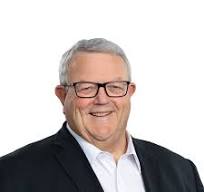
Parliament’s Speaker Gerry Brownlie strongly empathetic to Cuba
Previously, in Political Bytes, I have discussed the positive relationship between New Zealand and Cuba (30 April): A relationship worthy of strengthening.
Among other things, New Zealand has supported successful resolutions in the United Nations General Assembly calling for an end to the United States’ blockade of Cuba. However, to the best of my knowledge, the Government has been silent

The Government should learn from Paulo Freire
To paraphrase Brazilian philosopher Paulo Freire, being silent on the relationship between the oppressor and the oppressed means supporting the former against the latter.
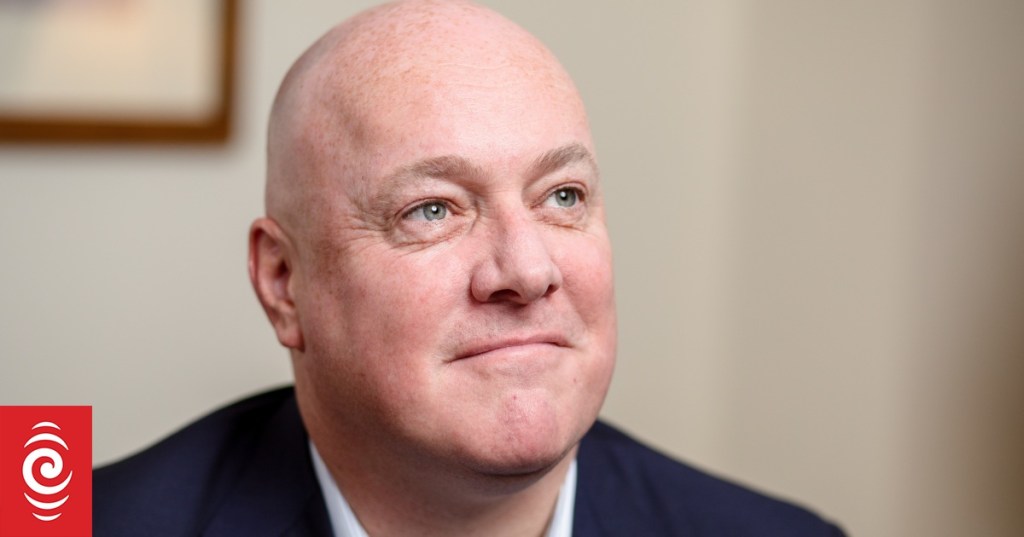
Christopher Luxon’s government has choices; it should exercise them in opposition to increasing infant mortality and starvation as a means to suppress Cuba
That is to say: being silent on the current humanitarian crisis in Cuba caused by the United States means supporting the initiator of the crisis against its victims.
The Government has choices. It could choose to side with the victims of this crisis instead implicitly with those who are responsible for it.
Recent Political Bytes Posts
- Wellington floods, climate change, wealth accumulation and suicidal capitalism (2 May).
- Making sense of Opportunities Party (14 April)
- US warfare against Cuba (25 March).
- Iran, US imperialism and New Zealand lapdog (19 March).
- Class warfare via employment law (3 March).


6 thoughts on “Inhumanity of US economic sanctions against Cuba – infant mortality and starvation; time to end New Zealand’s silence”