A small political party outside Parliament is starting to make political ripples. It is the Opportunity Party; until recently it had ‘The’ at the start of its name and ‘Opportunity’ was pluralised.
The ripples arise out of some recent credible opinion polls suggesting that the party was within striking distance of the 5% threshold for getting MPs elected to Parliament.
This led to speculation that it might change the potential composition of the next government after the election in November.
This speculation is enhanced by the continuing implosion within Te Parti Māori. That is, the possibility of a Labour-Greens government with some form of Opportunities Party involvement.
The Opportunity Party
The Party was founded in 2016 by economist and philanthropist Gareth Morgan based, so it argued, on being evidence-based, located in the political centre, and bridging the political divide by bringing new ideas, energy and honesty to politics.
Its general election polling has been poor – 2.4% of the party vote in 2017, 1.5% in 2020, and 2.2% in 2023. Each election defeat was quickly followed by the resignation of its leadership.

Qiulae Wong is the Opportunity Party’s new (4th) reportedly dynamic leader
Last November businesswoman Qiulae Wongbecame the party’s new leader in conjunction with updated policy priorities. Like her fellow announced election candidates, she is riddled with enthusiasm.
On Its website the Opportunity Party is described as follows:
We believe that New Zealand does best when all of us have what we need to turn effort into progress – like access to nature, good jobs, future-fit education and affordable basics.
For us, opportunity for all isn’t a luxury or some far-off goal. It’s how we build New Zealand together, today.
To turn that vision into reality, we’re going to Wellington to stand up for honesty, evidence and the big changes we need now.
We are the next generation of politicians.
Opportunity is made up of all kinds of Kiwis. Students and grandparents, entrepreneurs and teachers, recent arrivals and established families, renters and homeowners. We’re not career politicians. Just people who are tired of waiting for change, so are building it together instead.
This election, we’re standing up for a different kind of politics. It’s time to bring the left and right together, stop the policy flip-flops and tackle our biggest challenges.
Opportunity Party has developed policy priorities
Its policy priorities, expressed very generically, are healthy oceans, abundant energy, productivity unleashed, citizens voice, tax reset, cleaning up politics, honouring the Treaty of Waitangi, education, healthy land, healthy people, climate action, intergenerational infrastructure, affordable housing, and being smart on crime.
Rightwing or leftwing; or above?
The Opportunity Party describes itself as neither leftwing nor rightwing but instead sitting above both political positions; a recipe for ambiguity at least.
However, some within the political left have characterised it as a softer version of the National Party or another rightwing party in camouflage.
For them, if successful in meeting the 5% threshold, the Party would align, in spirit at least, with another rightwing government or other rightwing parties.
However, these have been expressed almost as throwaway soundbites rather than a conclusion reached after a considered and substantive analysis.

Ani O’Brien critiques Opportunities Party from a hard rightwing perspective; it suffers from her narrow paradigm
Instead it is left to hard rightwing commentator and activist Ani O’Brien to give the ‘considered and substantive analysis’ a go in a post published on the Word Press platform (26 March) and elsewhere: The truth!!.
It is cleverly written with a witty opening observation that the Opportunity Party “…isn’t above Left and Right. It’s just the Left in better packaging.”
Critics of the party from within the left might use her same witticism but simply replace “Left” with “Right”.
However, while her analysis might pass as ‘substantive’, it does not meet the ‘considered’ threshold.
Unfortunately O’Brien’s hard rightwing starting point leads to a simplistic analysis. The problem is that is that her paradigm mindset is too narrow.
The thought pattern or model through which she sees the Opportunity Party prevents her from considering a broader analysis. Somewhat like lacking peripheral vision.
The Opportunity Party uses terms such as climate transition, inequality, child poverty, biodiversity, housing equity, regenerativeeconomic systems, Treaty of Waitangi partnership, and co-governance.
O’Brien uses this to argue (the argument is more fully expressed in her above-mentioned blog post) that the Party is:
…not ideologically neutral. It is a more polished, less confrontational version of the same arguments that animate Labour and the Greens. TOP’s [sic] point of difference is not in what it believes, but in how it presents those beliefs. It strips out the activist rhetoric, softens the edges, and wraps the whole thing in the language of rationality and competence. It is Left-wing politics for people who do not like the current aesthetic of Left-wing politics.
The flaw in her argument is the assertion by implication that, by referring to the above-mentioned terms the Opportunity Party uses, it must be leftwing.
The nonsensical nature of this argument is that many on the political right also use these terms, positively so.

Former National Prime Minister Jim Bolger was leftwing in O’Brien’s paradigm
For example, National Prime Minister Jim Bolger was strongly supportive of respecting the importance of Treaty partnership issues in the 1990s as was his justice and treaty settlements minister Doug Graham (along with the rest of his cabinet).
The National led government from 2008-17 was in a similar vein including expressly co-governance. The point is that the left does not have a monopoly on the use of these various terms. On their own they don’t define what is and isn’t leftwing.
What does being leftwing mean?
Nearly three years ago I posted in Political Bytes my views on what being leftwing really means (30 April 2023): Leftwing means transformational over wealth accumulation driver.
I observed that:
Most of the commentary around left-wing and right-wing is along the lines that one is what the other isn’t; one ends where the other starts and vice versa. This becomes at best bland or meaningless and at worse absurd.
Further:
Being left-wing is about wanting to end, or even significantly curtail, the dynamic of wealth accumulation as a driver of [capitalist] societies. This might be through evolutionary or revolutionary means. But what it does require is transformational change.
Transformational is what the current Labour Party in government is not. It is a political party not of the left but instead of social liberal technocrats with some collectivist impulses.
Social liberal values are good and the political left benefits from sharing them. In fact, many people on the political right also share these same values (or at least some of them).
I concluded by affirming that:
The political left needs to expressly differentiate itself from social liberalism in order to overtly focus on economic (as well as social) justice and protecting nature from the ravages of wealth accumulation.
If the term ‘left-wing’ is to mean anything other than not being right-wing or just having some collectivist impulses, then this needs to happen.
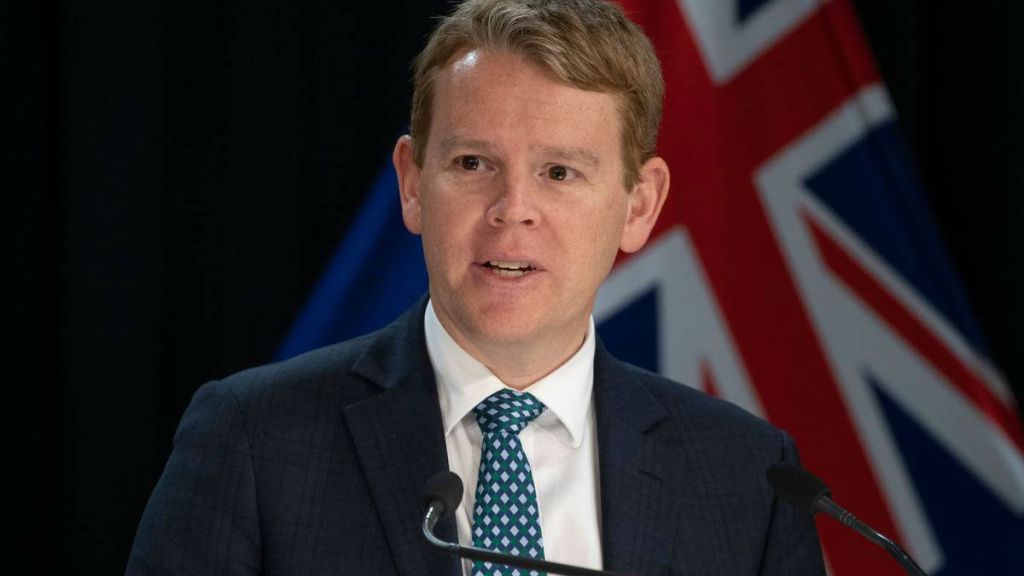
Chris Hipkins leads a social liberal technocratic, not leftwing, Labour Party
From my perspective the Labour Party is not leftwing because it isn’t transformational where it matters as discussed immediately above.
In contrast, the Greens have stronger credentials to earn the leftwing label. So might Te Parti Māori if it can ever overcome its current implosion modius operandi.
The current Labour Party is propelled primarily by a genuine social liberal technocratic political dynamic.

Labour Party veers towards collective responsibility; Does the Opportunity Party?
In the continuum between collective and individual responsibility, it veers more to the former; whereas the National Party veers more to the latter. But this is insufficient to define it as leftwing.
Locating the Opportunity Party
This is where the Opportunity Party fits in. Its policy priorities suggest that rather than leftwing or rightwing (or sitting above both), it is a genuine social liberal party.
It resonates with my recollection of the Values Party which generated much excitement in the 1972 general election (many consider the Values Party to be the precursor of the Greens).
Its main difference with Labour appears to be uncertainty where it sits on the collective-individual responsibility continuum and lack of political experience and history (it is a young party and its candidates are young – not a criticism).

Will these ripples become a political wave?
As a resident of the Kapiti Coast for over 40 years I’m familiar with ripples. Often ripples evolve into bigger waves.
The question is whether the enthusiasm generated by this political ripple (the Opportunity Party) becomes a political 5%+ wave in November. If it does there will be an intriguing new parliamentary dynamic.
Recent Political Bytes posts
- US warfare against Cuba (25 March).
- Iran, US imperialism and New Zealand lapdog (19 March).
- Class warfare via employment law (3 March).
- Courageous words from unbreakable spirit (2 February).
- Why Trump deserves Nobel Peace Prize!!! (24 January).


if you are looking for a genuine left wing party try the revitalised Alliance party. New Zealand needs radical change if it is to achieve the massive infrastructure investment needed and if it is to overcome the ever increasing economic inequality in this country
LikeLike